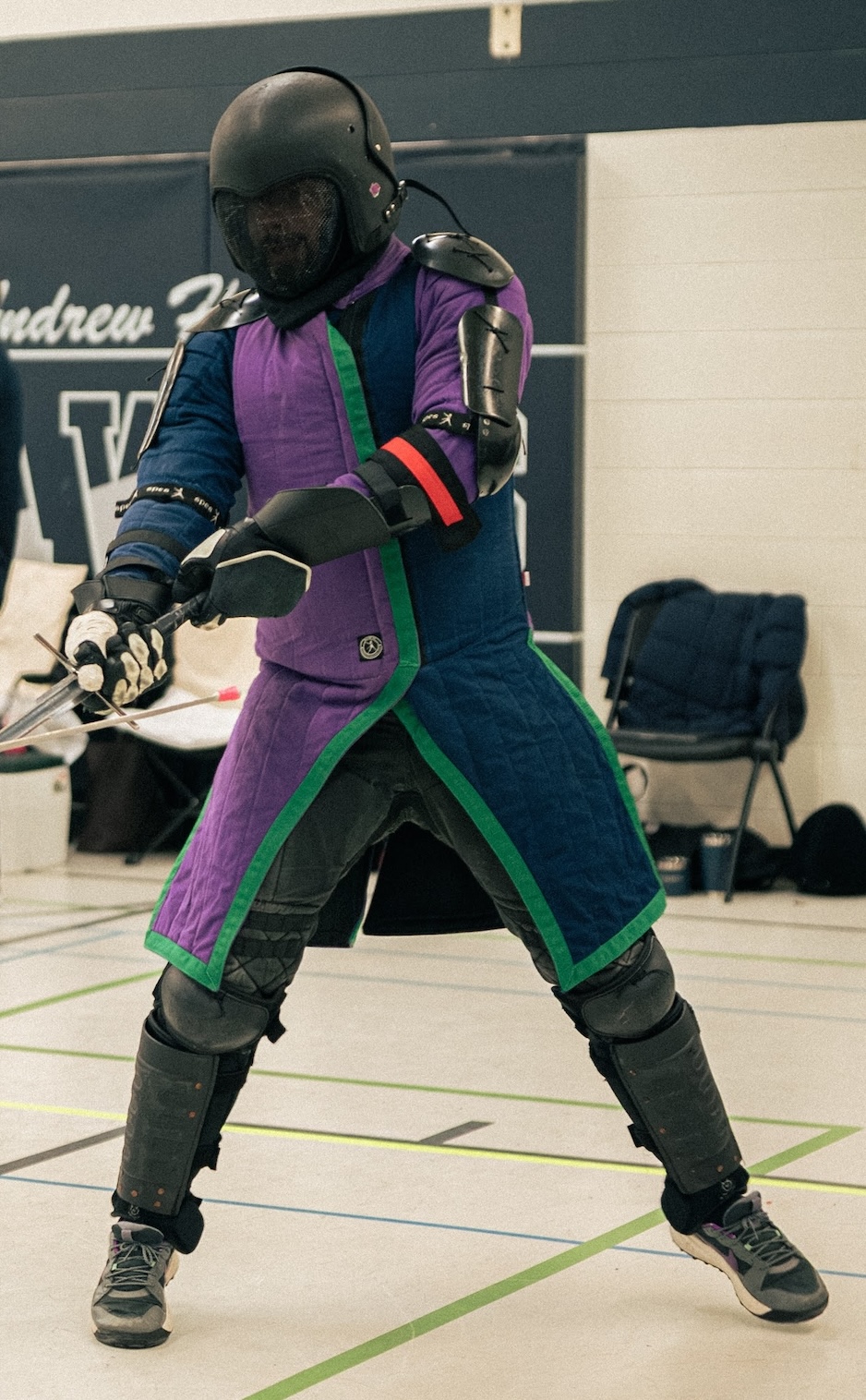
Forearms and Elbows#
A thick padded jacket isn’t enough to protect your elbows from a direct strike. Elbow protection is often combined with forearm protection, and should be worn on both left and right sides even if you’re only using a one-handed weapon in case a blade grab goes wrong.
Forearm and elbow protectors are usually not needed for smallsword, but some tournament organizers may require them regardless.
(See also upper arms and shoulders.)
Recommendations#
All of the below recommended protectors are accepted by local tournament organizers.
SPES#
For single-handed weapons, the SPES Geko and Vectir protectors are probably some of the best protectors you can get. They wrap around the whole arm, and the elbow protector attaches with velcro to provide overlapping coverage even with a bent elbow. It’s possible to do longsword sparring with them too, but since these protectors use several strips of plastic inserts instead of one or two big pieces, you’ll still feel a hard hit from a longsword.
SPES also sell PRO Set forearm guards which are designed as a single piece plastic shell for each elbow and forearm. These definitely offer superior protection wherever the shell covers, but leave a gap on the inside of the forearm.
Superior Fencing#
The Heavy Arm Protector offers comprehensive protection for anyone practicing longsword. These don’t require arming straps which makes them compatible with a wide variety of jackets.
Maestro#
These are relatively new, compared to other entries. Their design is similar to the SPES PRO Set, but do a proper job of closing the gap on the inside of the forearm. The elbow pad requires an arming strap.
North Armoury sells a plain version, or you could opt for the somewhat stylized HCA version.
What Else?#
It’s not really possible to cover the wide variety of elbow and forearm guards out there, not to mention the odd wandering leathercrafter you might encounter at events. As general recommendations go, always wear rigid elbow guards, and look for forearm guards that provide continuous protection of your outer forearm by overlapping with your elbow guard and the cuff of your gloves. Despite misgivings in this guide about gaps in inner forearm protection, that part of your arm is soft, unlike the outside where your bones are.